LeatherBackpacker
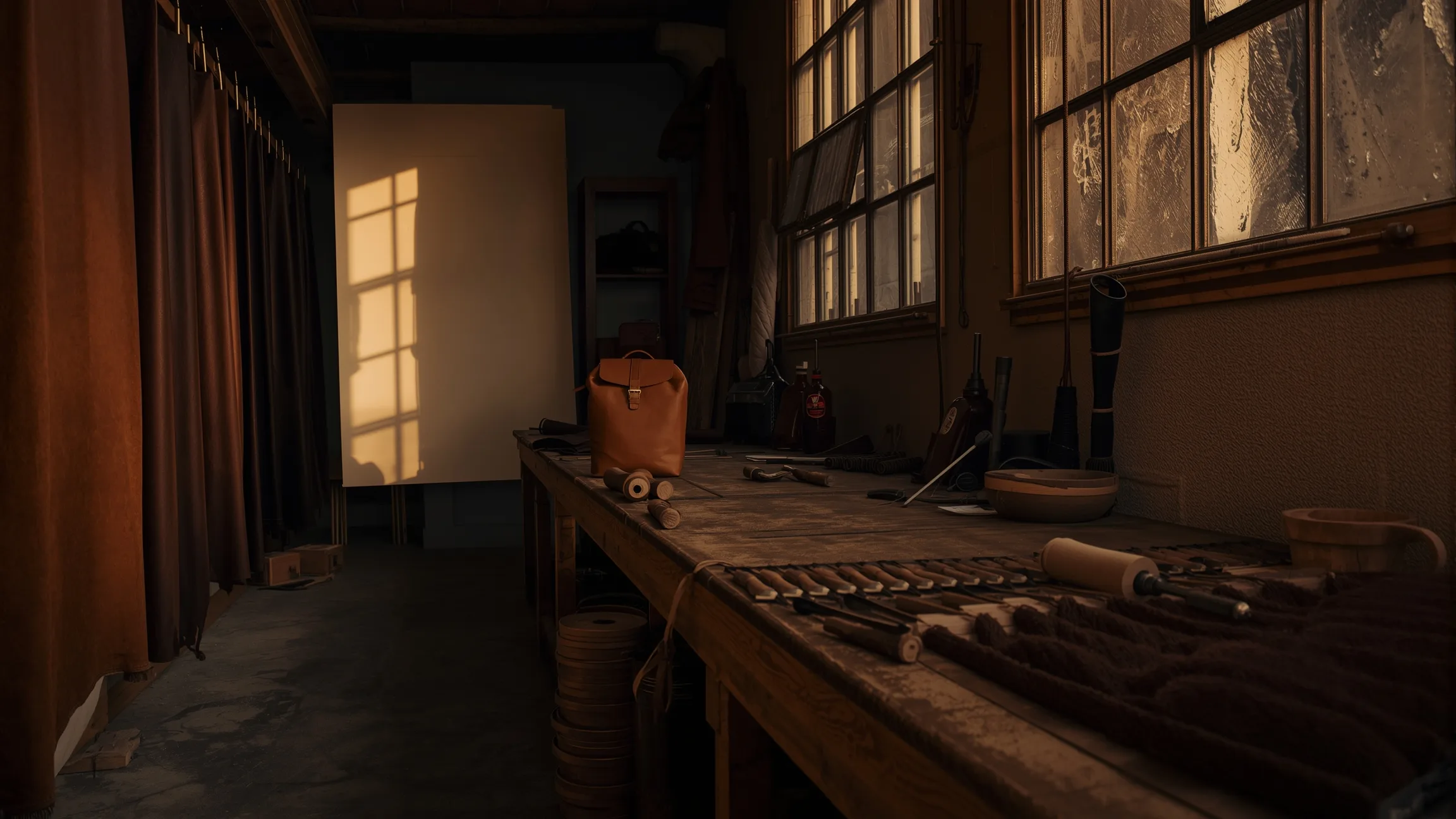
Leather workshop at golden hour, full-grain hides hanging beside a workbench with brass hardware and waxed thread

Ages on purpose

Full-grain | Built for decades

What 'genuine leather' actually confesses

A full-grain leather backpack keeps the hide's intact surface — pores, scars, the tight fiber structure that carries load and earns patina. 'Genuine leather', the label that sounds like reassurance, is the industry's polite term for the lower splits: real leather the way sawdust is real wood.

The confession is usually on the tag. Brands with full-grain hides say so loudly, because it costs real money; 'genuine leather' at a suspicious price answers a question you no longer need to ask. Veg-tan ages dramatically and starts stiff; chrome-tan starts soft and stays put — only one keeps a patina promise.

  • Full-grain veg-tan hide, 2.2 mm
  • Saddle-stitched stress points
  • Solid brass YKK zippers
  • 7.5 cm straps, anchored high
  • Repairable for life

Where bags actually die

Almost no leather backpack fails through the leather. It fails at seams and anchor points — strap roots, top handle, panel corners — where a machine lock-stitch, once nicked, unzips a little more with every commute. The leather was fine; the thread gave up.

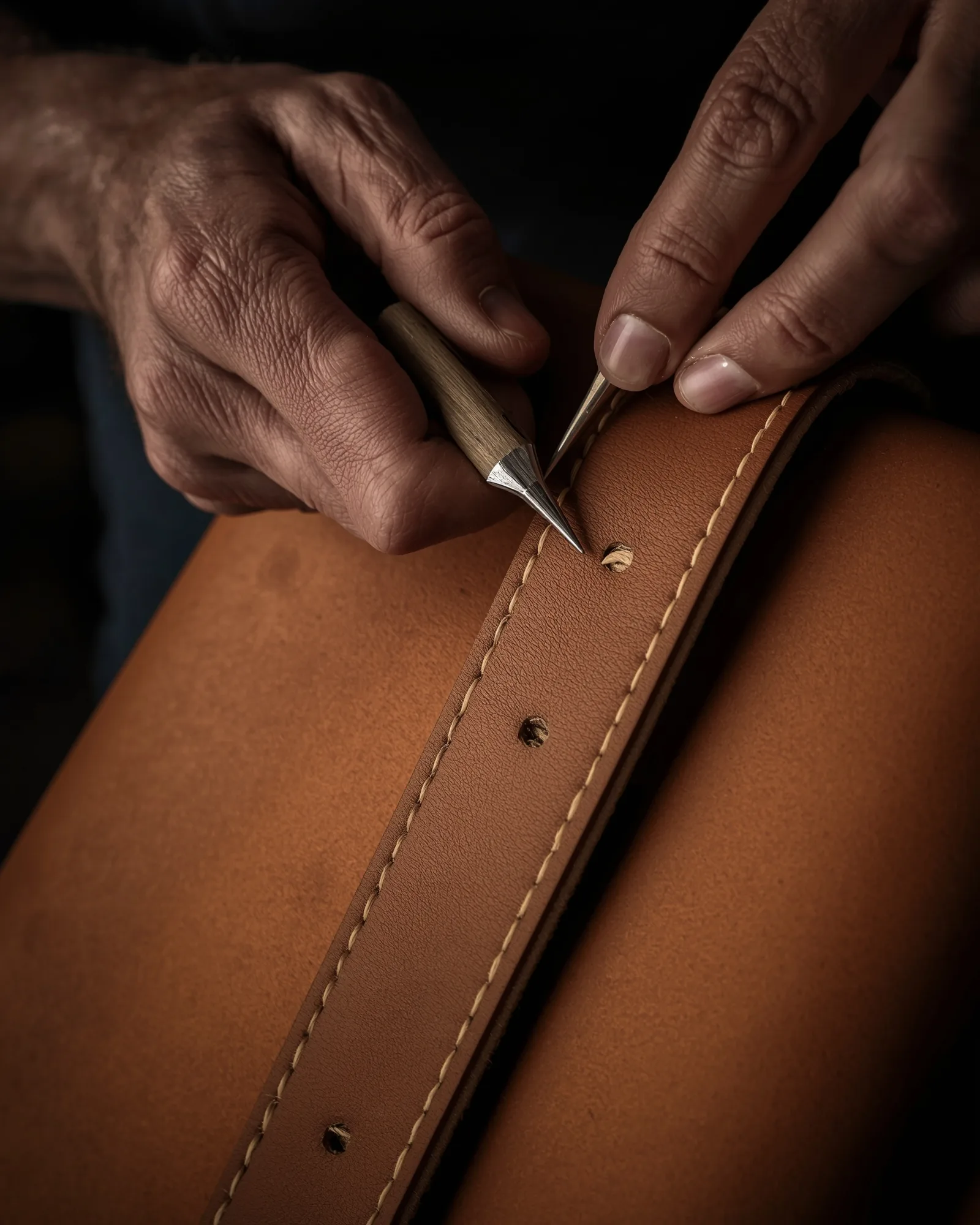
Saddle stitching survives as a hand technique because two needles cross one thread inside every hole — a broken stitch stays anchored by its neighbors instead of unraveling the run. Look for hand work's slight zigzag angle at the strap roots; it's the difference between year three and year thirteen.

See the packs
Craftsman's hands saddle-stitching a backpack strap root, two needles on one waxed thread, stitch line slightly zigzagged

Introducing

The LeatherBackpacker line

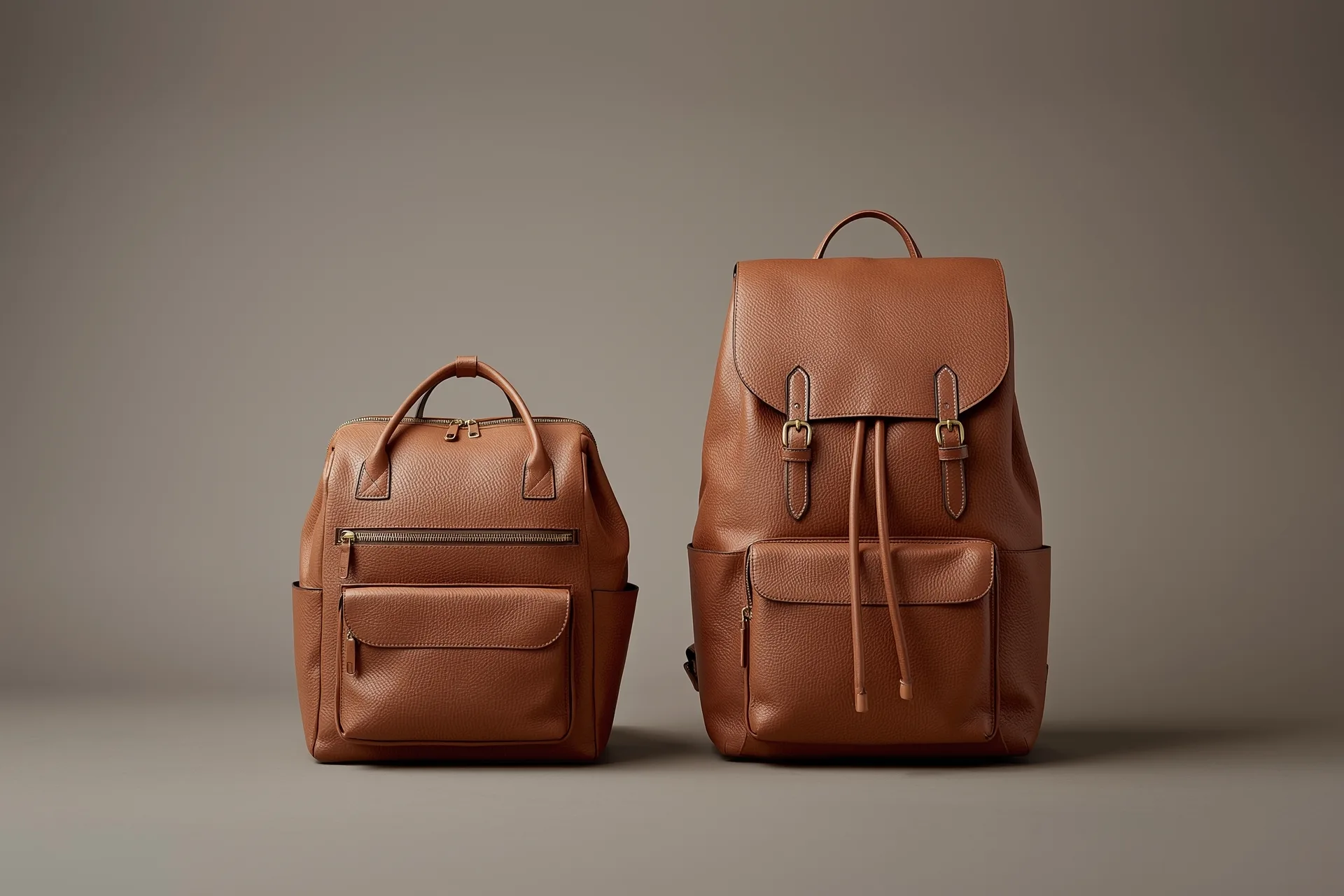
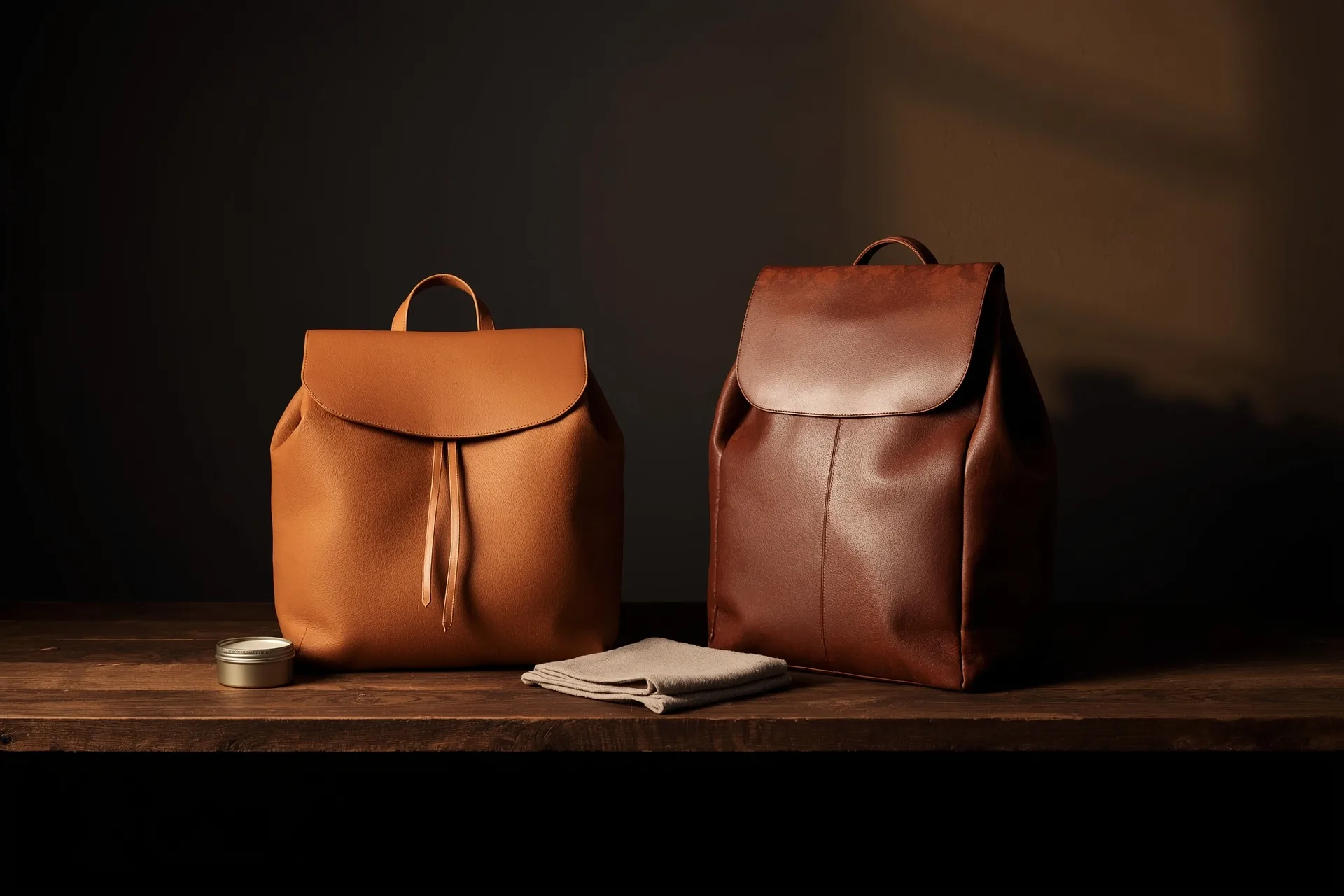
Two full-grain leather backpacks, a 22-liter daypack and a larger 34-liter carry-on, standing open side by side in a studio

The Journeyman — 22 L Full-Grain Daypack

The daily carry, built to this page's own audit: full-grain veg-tan hide, saddle-stitched and bar-tacked strap roots, solid brass zippers, 7.5 cm padded straps anchored high, detachable sternum strap. Fifteen-inch laptop shell, stands open to load, ages loudly and on purpose.

  • Full-grain veg-tan hide, 2.2 mm
  • Saddle-stitched stress points
  • Solid brass YKK zippers
  • 7.5 cm straps, anchored high
  • Repairable for life

$329

Ask about the Journeyman
The Weekender — 34 L Carry-On Pack

The same construction grammar at cabin-bag scale: trolley sleeve, tuck-away straps for the overhead bin, a shirt-flat main compartment, and the brass-and-saddle-stitch spec throughout. One bag from Monday commute to Sunday flight home.

  • 34 L, sized to cabin allowances
  • Tuck-away straps + trolley sleeve
  • Journeyman spec: hide, stitch, brass
  • Lays flat to pack, stands open
  • Repairable for life

$459

Ask about the Weekender

The weight question

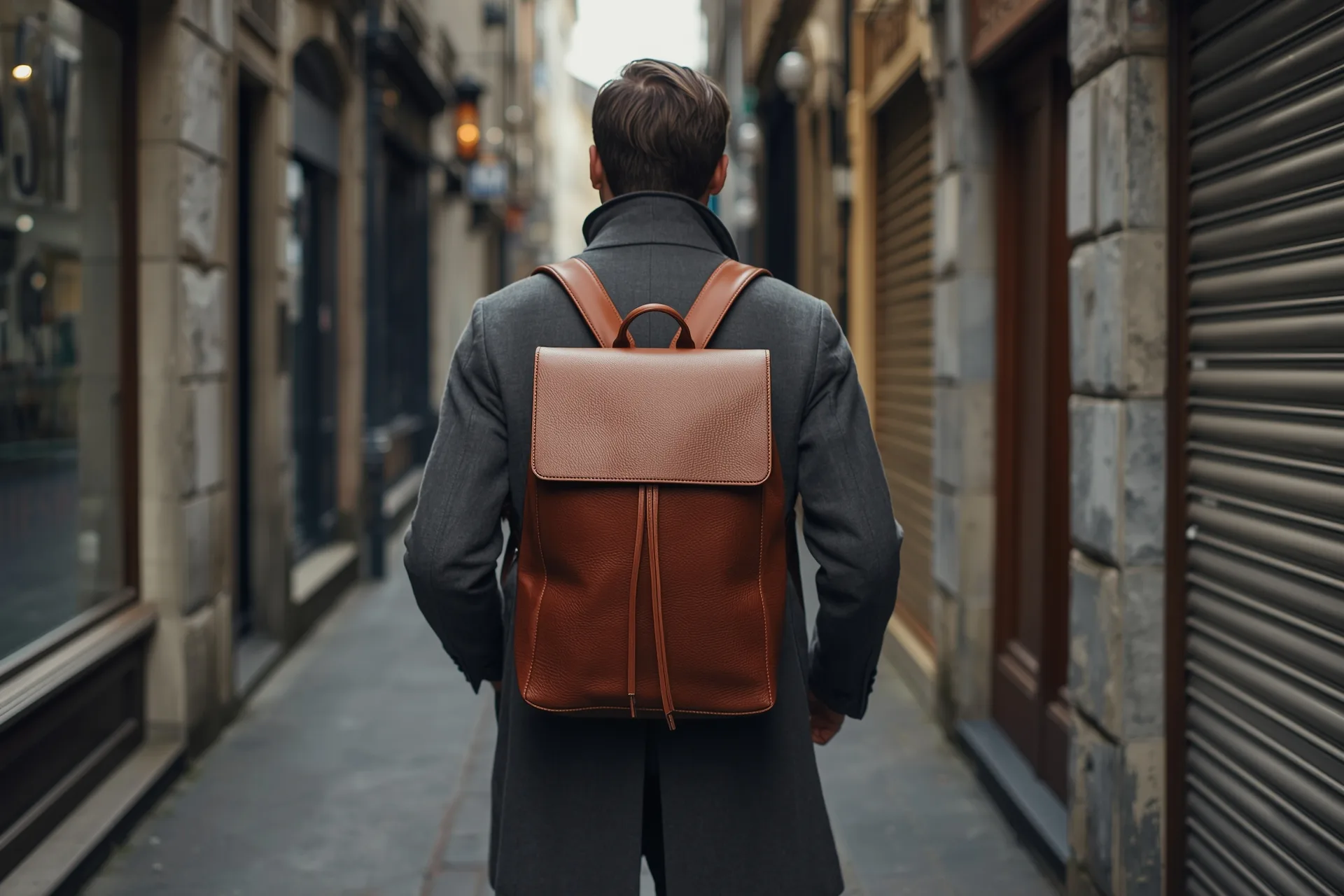
Full-grain leather is heavy — a fair-sized pack starts around 1.5 to 2 kilograms empty. The honest response isn't denial; it's strap engineering. Wide straps, 7 centimeters and up, with real padding distribute the load; thin elegant straps concentrate it into two lines of regret by the third block.

Check where the straps anchor: high and close at the top, wider at the base, so the bag hugs your back instead of swinging. Almost nobody fits a sternum strap to a heritage bag; the brands that do — discreetly, detachable — are thinking about your Tuesday, not your photo.

The payoff for the grams is structure: a full-grain pack stands open while you load it, shells a laptop instead of sleeving it, and doesn't collapse under the café table. You carry more weight; the bag carries it better.

Commuter seen from behind wearing a full-grain leather backpack with wide padded straps anchored high, on a European street

The decade math

A fast-fashion backpack replaced every two years costs its price times five per decade, plus five rounds of moving your life between bags. A full-grain pack, amortized across the same ten years, usually comes out cheaper per year by the midpoint — and spends those years getting better looking.

The catch, honestly stated: the math only works if the whole bag clears the bar. Full-grain leather stitched with a lock-stitch and zipped with plastic is a decade hide on a three-year chassis — the worst of both invoices. Grade, stitch, and hardware have to pass together.

Our packs are built to that spec and repairable past it — stitching serviced, hardware replaced, worn corners rebuilt. The best decade math includes a bag that can start its second one.

Zippers, rivets, and the buckle problem

Zippers: the smallest line item, the loudest failure. A seized slider strands the whole bag; solid brass sliders and metal teeth run for decades and improve as they wear in. If the marketing photographs the zipper pull up close, somebody cared past the leather.

Rivets and buckles: rivets at stress corners should be set through the leather and backed inside, not decorative caps glued over stitching. Magnetic snaps are convenience with a lifespan; a buckle is theater unless it adjusts something — many are sewn-shut decoration, so check.

Cast versus stamped: cast metal beats stamped plate everywhere it appears, and you can hear it in the shop — a dull click versus a tinny snap. A decade-grade hide deserves fittings on the same schedule; the bag should age as one object.

New light-tan leather backpack beside a five-year-old one with dark honey patina and soft creases, side-lit on a workbench

Patina: earned, not bought

The whole maintenance calendar: condition two or three times a year with a neutral leather balm — five minutes with bare hands and a cloth. Wipe rain off when you remember. Stuff it with paper if it's stored empty for months. Leather wants oils replaced occasionally and to be used, not curated.

Scuffs mostly buff out with a fingertip's warmth and a drop of conditioner; the ones that don't become the patina you were promised. Real soakings want a slow room-temperature dry — never a radiator, which cooks leather into cardboard — then conditioning once fully dry. Full-grain forgives more than you'd fear.

What voids the decade: cooking in a car window all summer, plastic storage (leather breathes; bagged bags mold), and silicone 'protector' sprays that seal the surface conditioner needs to reach. Do almost nothing — but do it with decent balm.

Stiff new veg-tan leather backpack standing open, flap beginning to crease at its first fold line, in raking window light

The break-in months

A full-grain veg-tan pack arrives stiff, and the first weeks are a negotiation neither party can skip. The flap resists, the straps stand off your shoulders, and the leather creaks when you load it. Not a defect — the raw state of a material that will eventually fit like it was cast from your back.

The break-in accelerants are use and warmth, in that order. Carry it loaded from day one; the flex points want repetition, not products. A first light coat of balm after two or three weeks — once the surface has taken its first scuffs — softens the hand noticeably.

What doesn't work: oiling a brand-new bag into softness (you'll overload the leather and dull its patina), and the internet's oven, hairdryer, and wet-towel schemes — ways to pay full price for damaged goods. Around month three the creak retires and the bag starts being yours: three stiff months, ten conforming years.

Questions, answered

How can you tell if a backpack is really full-grain leather?

Look for natural grain variation — pores, faint scars, no repeating pattern — and cut edges that show fiber, not fabric backing. A water droplet on full-grain absorbs slowly, within about thirty seconds, instead of beading on a coating. And read the tag: brands that pay for full-grain say 'full-grain', never just 'genuine'.

How long does a leather backpack last?

A full-grain leather backpack lasts twenty to thirty years with basic conditioning; bags labeled 'genuine leather' typically show serious wear within two to five. Failure almost never comes through the hide — it comes at stitches and hardware, so in the shop, tug the handle and watch the seam. Creaking stitches are a retirement date.

Is a leather backpack worth the money?

Worth it if — and only if — grade, stitch, and hardware clear the bar together. A cheap bag replaced every two years costs its price times five per decade; a full-grain pack amortized over the same ten usually wins by the midpoint, and it can be repaired into an eleventh year instead of replaced.

Will it scratch? The first scuff is stressing me out.

Yes — and then the scuff will soften, darken, and disappear into the developing patina, usually with nothing more than a fingertip of conditioner. Full-grain is the only grade this works on; that first-scratch anxiety is precisely what the bag is designed to outgrow.

How heavy is it, honestly?

The Journeyman is about 1.8 kg empty — real weight, carried well by wide padded straps anchored high. If your daily load is featherweight and weight is your first criterion, honest answer: buy nylon. Leather's argument is structure, longevity, and looks, never grams.

What does 'repairable for life' cover?

Re-stitching, hardware replacement, and corner rebuilds on our packs, at cost of parts and shipping — because the honest decade math includes year eleven. What it doesn't cover is a bag run over by machinery, though we have re-stitched one of those too, out of respect.

LeatherBackpacker started at a workbench, not a brand studio: one maker re-stitching the strap roots of other people's failed bags and noticing it was always the same three shortcuts — split leather, lock-stitched stress points, tinny hardware. The catalog is small because the spec is non-negotiable.

We publish the audit — grade, stitch, hardware — precisely so you can use it against us in the shop. Bags that pass get better for ten years. Ours are built to pass.

When the eleventh year asks questions, the repair program answers: re-stitching, hardware replacement, and corner rebuilds at cost of parts and shipping. Repair queries are welcome even for bags that aren't ours.

The workshop letter

Batch announcements (they're small), care techniques with photos, and the occasional essay on why zippers matter more than logos. Monthly, from the bench.